For over a thousand years Kyoto was Japan's imperial capital, and it still feels like the country's cultural conscience — the place where tea ceremony, Zen gardens and the geisha districts were refined into something close to art. Its rewards are quiet ones, and they go to travellers who slow down, start early, and leave gaps in the day. Here is our curated shortlist of what is genuinely worth your time, and how to see it before the crowds arrive.
“Kyoto rewards the traveller who slows down. A curated guide to the temples, shrines, gardens and food worth your time in Japan's old capital — with hours, access and how to dodge the crowds.”
How many days you need
Three days lets Kyoto breathe: one for the eastern Higashiyama temples, one for the western Arashiyama district and the Golden Pavilion, and one for a slower mix of gardens, markets and a day trip to nearby Nara. The city is compact, ringed by wooded hills and easy to cycle, but the headline sights sit on opposite sides of town — so the single most useful habit is booking the popular temples for opening time and building the day outward from there.
The experiences worth your time
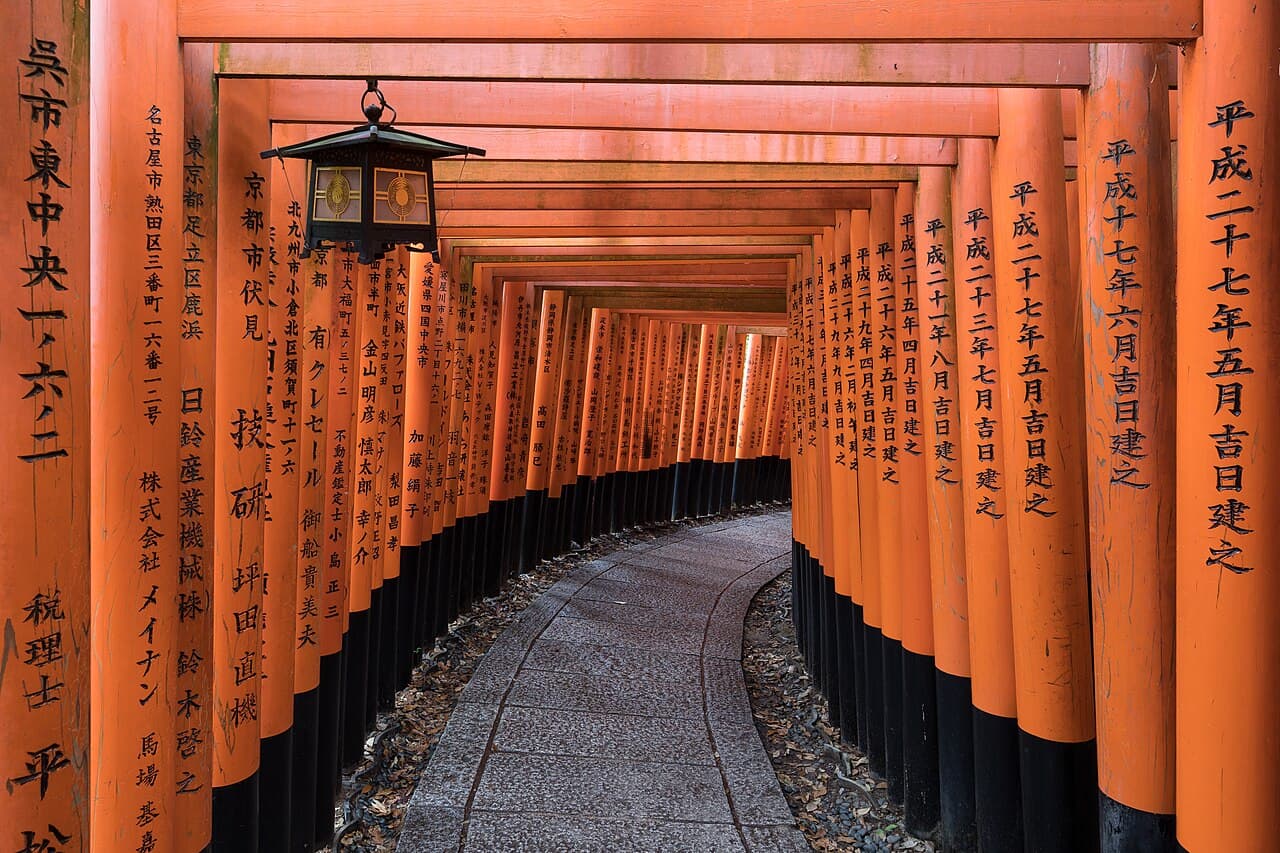
Fushimi Inari's torii gates
Free · 2–3 hoursThousands of vermilion torii tunnel up a sacred mountain in an unforgettable procession. It is free and open 24 hours — which is its secret: come at dawn (it is a five-minute walk from JR Inari station) and climb past the crowded lower shrine to the near-empty upper trails. The full loop to the 233-metre summit takes two to three hours.
See the guideKinkaku-ji, the Golden Pavilion
¥500 · 1–2 hoursA gold-leafed Zen temple mirrored in its own reflecting pond, and Kyoto's most photographed sight for good reason. Open 09:00–17:00 with a 500-yen entry; it is small but perfect, so pair it with the nearby raked rock garden at Ryōan-ji to make a morning of the north-west.
See the guideArashiyama bamboo grove
Free · Half dayTowering green stalks filter the light along a path on Kyoto's western edge. It is free and always open, so go at first light before the crowds, then continue to Tenryū-ji's garden and the monkey park on the hill above the river. It is a ten-minute walk from Saga-Arashiyama station on the JR Sagano line.
See the guideKiyomizu-dera & the Higashiyama lanes
¥400 · Half dayA vast wooden temple on stilts with a hillside view over the city, reached through the preserved slopes of Sannenzaka and Ninenzaka. It opens early (around 06:00) with a modest entry fee — do it first thing, then wander down the lantern-lit lanes for tea and craft shops.
See the guideA traditional tea ceremony
¥¥ · 1–2 hoursSit through the deliberate, meditative ritual of whisked matcha and seasonal sweets, guided by a host in a tatami room. It is the most direct way to feel the aesthetic that shaped the whole city — and a welcome, air-conditioned pause in the middle of a temple-heavy day.
See the guideGetting around
Kyoto runs on a mix of city buses, two subway lines and the JR and private railways that reach the outer sights. A rechargeable IC card (ICOCA or Suica) works on almost everything and saves fumbling for change. Distances in the centre are walkable and the city is famously flat and cyclable — renting a bike for a day is one of the nicest ways to link the eastern temples. For Fushimi Inari and Arashiyama, the train is faster than the bus.
When to go
The two headline seasons are cherry blossom (typically late March to early April) and autumn colour (November) — both spectacular and both very crowded. If you can, travel the shoulder weeks on either edge, or simply commit to being at each temple for opening time; an hour's discipline in the morning is worth more than any secret spot. Summer is hot and humid; winter is crisp, quiet and underrated.
For the complete picture — all the experiences, where to base yourself, and the day trip to Nara — see our full Kyoto guide.
Sources
- Fushimi Inari Taisha — official tourism listing — Japan National Tourism Organization
- Kinkaku-ji (Golden Pavilion) — access & hours — Shokoku-ji
- Kiyomizu-dera Temple — visitor information — Kiyomizu-dera
- Kyoto travel guide — japan-guide.com
About the author
Folio Voyage Editorial
The editors behind Folio Voyage — independent, originally-written and researched city guides, curating the tours and experiences worth your time.
Written independently and last reviewed July 14, 2026. Folio Voyage is reader-supported — see our affiliate disclosure or get in touch.